

CEO Blog – March 2026
The road victims trust – Ten Years On: Stepping Away from the Police
MARCH 2026 CEO Blog
Ten Years On: Stepping Away from the Police
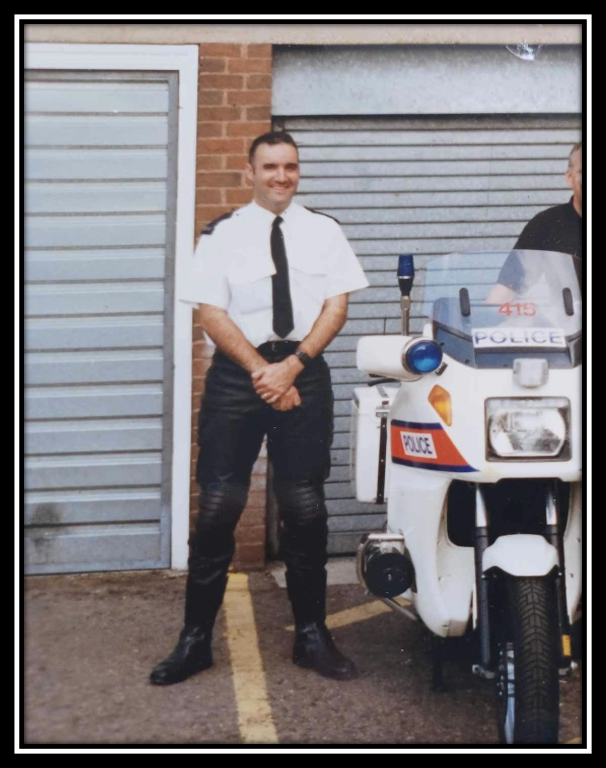
This month marks ten years since I retired as a police officer.
When I joined at nineteen, I naively believed it would be a career that lasted forever. At that age, the uniform felt permanent. The structure, the camaraderie and the sense of purpose became normal life. It was difficult to imagine a time when I wouldn’t be part of it.
Policing in the mid to late 1980s had a very different feel. At Bedford CID, testosterone hung in the air alongside cigarette smoke and Paco Rabanne. Leather jackets were draped over the backs of office chairs, and “Ashes to Ashes” sometimes feels more like documentary than fiction. It was fairly intense and personally challenging, particularly as a young man learning about life far more quickly than I might have expected. Tolerance was sometimes in short supply, and you had to work hard to earn acceptance. It was a culture that demanded resilience, confidence and a willingness to prove yourself.
Moving into roads policing brought a different kind of challenge. The step up into a specialist role was a significant one. There was pressure to perform, particularly as a driver, and expectations were high from day one. Ten years in that role, from the age of 22, required maturity in double quick time. You relied heavily on your crewmate. Trust was everything — whether attending a collision scene or managing situations where judgement and teamwork were vital.
Despite the significantly higher rates of fatal and life-changing collisions in the 1990s, our focus was always on making the roads safer. If I’m honest, education and prevention probably sat more in the background. Enforcement was the primary tool at our disposal. We did what we could to identify and remove those who posed the greatest risk, believing — often rightly — that this was how we reduced harm.
It was demanding work, but it was purposeful. You felt you were contributing, even if the wider picture sometimes felt stubbornly unchanged.Each drink driver, disqualified driver or travelling criminal that you removed from the roads provided a moment of satisfaction.
Many of my roles over the years leaned towards protection and prevention — child protection, domestic abuse, online abuse of children, and the management of sexual and violent offenders. They were challenging roles, but vital ones. They were about creating safer environments for some of the most vulnerable people in our communities. That sense of responsibility — of preventing harm to those at risk — became central to how I saw my role.
In my final three years, following promotion, I spent most of my time in a corporate role. For 95% of my working week, I was no longer operational. Instead, I was learning about systems, governance, leadership and organisational strategy. At the time, I didn’t fully appreciate how valuable that experience would become, but the skills I developed there are ones I still draw upon today.
Policing helped to make me the person I am. The experiences over thirty years shaped my approach to the rest of my life.
The Next Chapter
After retiring, I spent five years in a police staff role — originally intended to last three months while I “worked out what was next.” As it turned out, next took a little longer to materialise, as I settled into that zone of comfort.
Eventually, I was ready for something different. A period of normality. Running my own gardening business for two years was immensely satisfying. My customers smiled when I arrived. Conversations were not just about lawns, hedges and the weather — although they were sometimes. More often, they were about their lives, what shape to topiarise a hedge, and whether I preferred a coffee or a cold drink. It was, in many ways, a refreshing contrast to the intensity of policing.
A back injury eventually brought that chapter to an end. And with it came a few months of reflection. What next? What did I actually want to do? What could I do?
I came to a simple realisation: doing something that lacked meaning — something that did not offer an opportunity to make a difference — was not an option. Work had always been about making a difference. A positive one. Without that, it would simply feel shallow and without purpose.
It was through that lens that I was fortunate to secure my position at The Road Victims Trust.
Ten years on from leaving policing, I can see that the thread running through each chapter has been consistent: protection, responsibility and a desire to make environments safer and to stand alongside those who are vulnerable. The uniform and settings changed. My underlying motivation to make a difference did not.
Paul Cook
Chief Executive Officer
The Road Victims Trust