

CEO Blog – July 2026
Through a Different Windscreen – Lessons from a French Road Trip
Over the past year, these monthly reflections have explored the work of the Road Victims Trust and the people who make that work possible.
This month is a little different.
A two-week road trip through France gave me an opportunity to slow down, reflect and return home with a fresh perspective—not only on roads and road safety, but also on the importance of taking time to appreciate the journey itself.

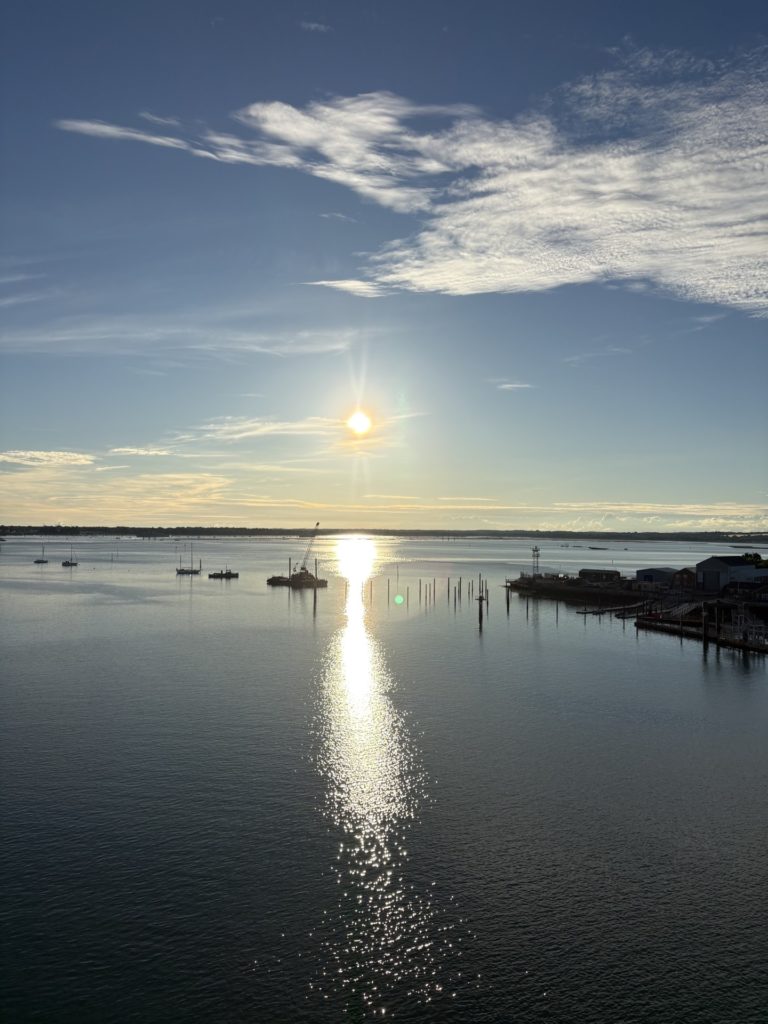
Life has a habit of gathering pace.
Work, family, commitments and deadlines quietly fill our diaries until slowing down becomes something we promise ourselves we’ll do tomorrow, next week or in a couple of months when “things settle down”.
For two weeks, France reminded me why that would be a mistake.
Erika and I had been looking forward to our summer road trip for months. Travelling anti-clockwise around Brittany before heading into Normandy, it promised to be an opportunity to switch off, explore somewhere new and simply enjoy the journey.
As we disembarked in Saint-Malo from our overnight ferry, there was, naturally, that brief moment of concentration familiar to anyone who has driven abroad. It had been ten years since I had last driven on the right-hand side of the road in a foreign country, so after more than forty years of driving on the left, my brain had one important task – remember which side of the road I was meant to be on.
Fortunately, it adapted remarkably quickly. We found our way into the city centre and our hotel with ease and, before long, I had stopped thinking about which side of the road I was driving on altogether.
The Journey
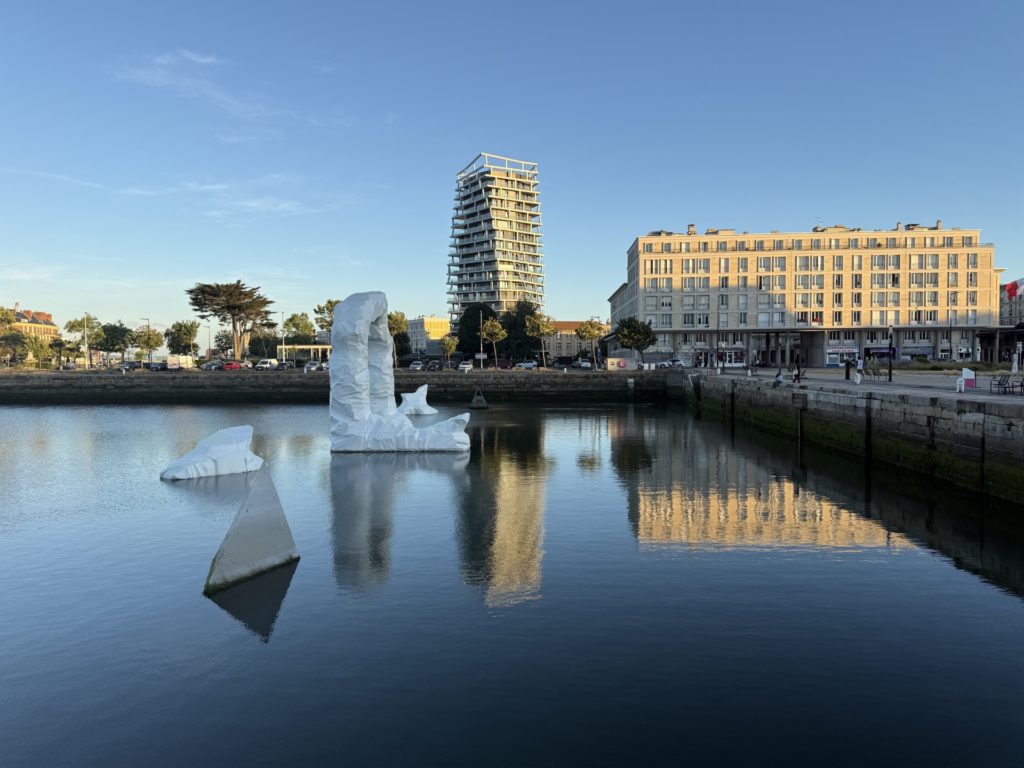
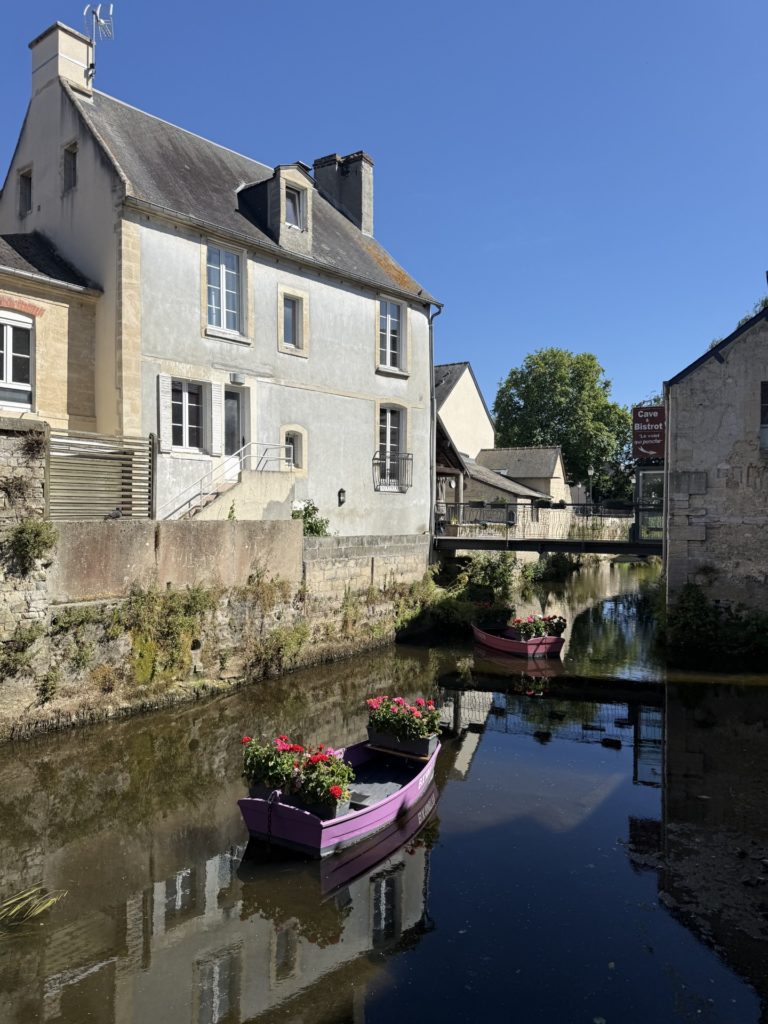
Our route took us through some remarkable places. Dinan, with its medieval streets and half-timbered buildings. Laval, where we enjoyed a wonderfully indulgent day at Dick and Angel Strawbridge’s Escape to the Chateau. Then on to Vannes, Quiberon and Brest before crossing into Normandy to explore Bayeux, Rouen and Amiens, together with countless smaller towns and villages that seemed unspoilt by the passage of time.
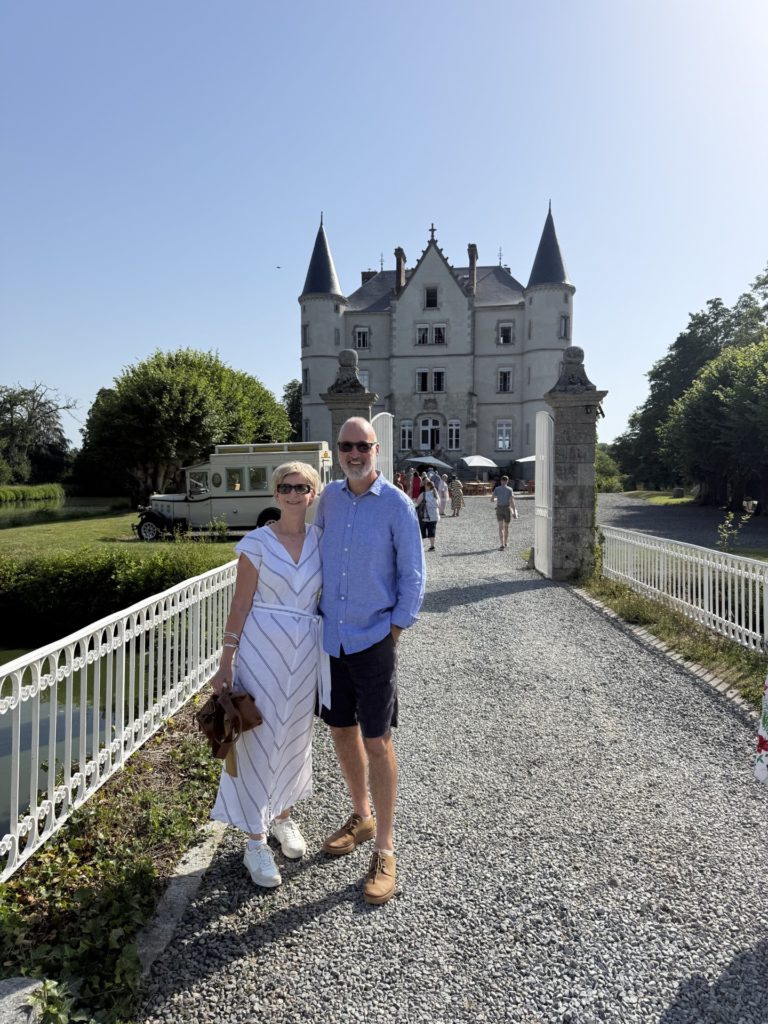
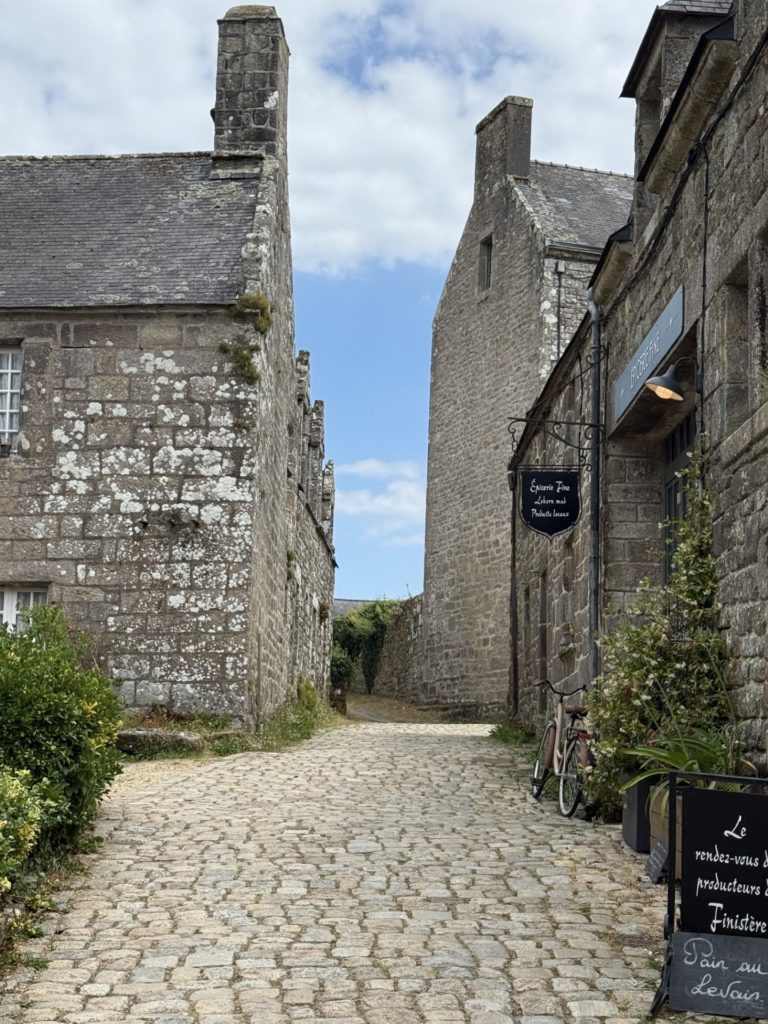
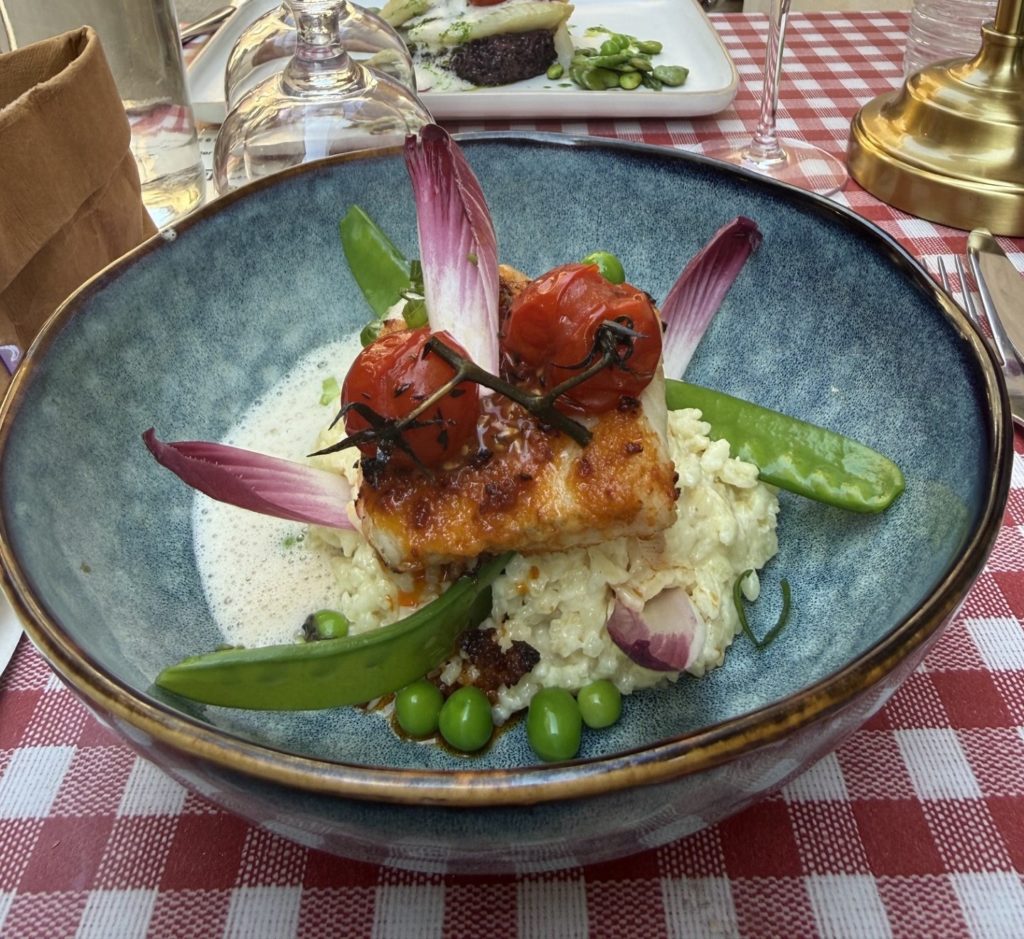
The scenery was breathtaking, the food exceptional and, wherever we went, we were met with warmth, patience and genuine hospitality.
One observation still makes me smile. The French seem wonderfully unapologetic about the quality of their food. There is a quiet confidence that what arrives on your plate will be excellent and, in my experience, they were absolutely right. After two weeks of enjoying fresh seafood, beautiful bread, local cheeses and the occasional low calorie dessert, I found myself thinking that what we might jokingly call French arrogance is probably just well-earned pride. They know their food is exceptional… and, to be fair, they’re right.
English Determination
I was also determined not to waste the 229-day Duolingo streak I had painstakingly built before the trip. Whilst my French remains very much a work in progress, every café, restaurant and hotel became an opportunity to practise. I ventured beyond simple greetings, attempting everything from ordering meals, asking about menus and paying the bill. I progressed on to returning hotel keys and enjoying the occasional friendly conversation.
I’m sure my pronunciation occasionally raised an eyebrow (sometimes both at once). However, every attempt was met with patience, encouragement and a warm, approving French smile. Whether they understood every word I was trying to say is another matter entirely! It quickly became apparent that the French genuinely appreciated an Englishman making the effort to speak their language, however imperfectly.
After only a few days, I realised that making the effort to speak another language was warmly appreciated by our French hosts. It created opportunities to converse, laugh (generally at my expense) and a deeper appreciation of the places and people you encounter. I floundered on occasions in my comprehension and my ability to translate in quick time due to the speed at which the French speak. Fortunately the participants in the “conversation” were generally gracious enough to take pity on the gallant and undeterred French speaking Englishman.
A Moment to Reflect
As we left Brittany and entered Normandy, the pace of our journey changed once again.
One part of the journey will stay with me for a very different reason.
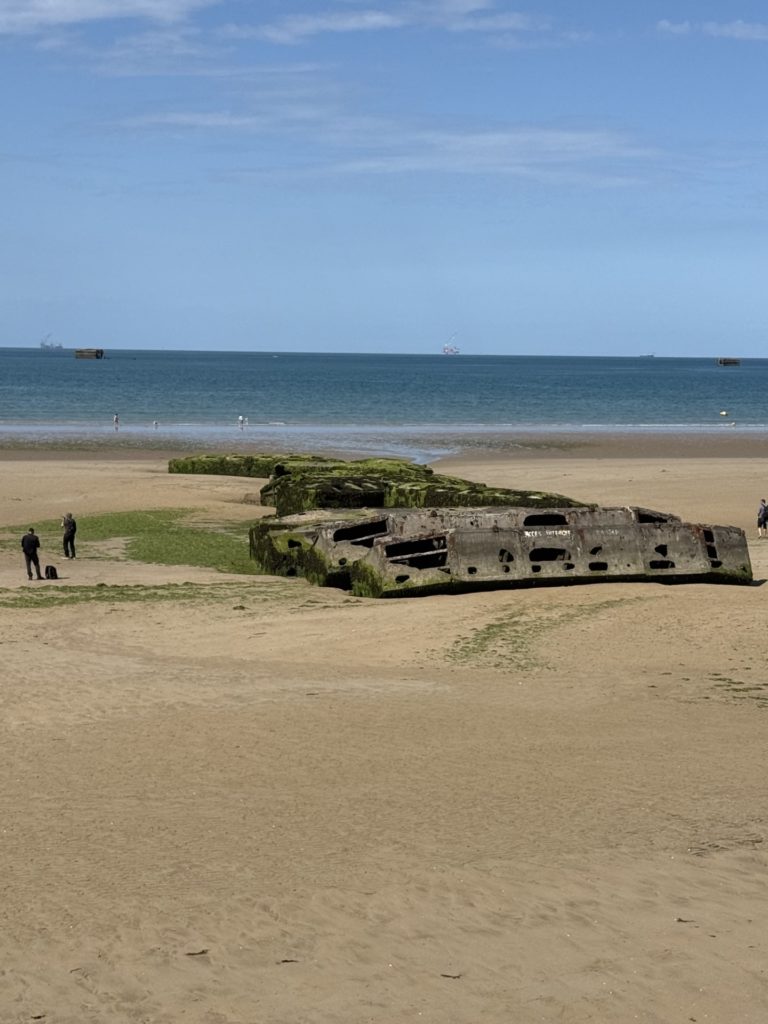
Travelling through Arromanches and along the Normandy beaches, it was impossible not to pause and reflect on the events of June 1944. Standing where so many young men landed under unimaginable circumstances, I found myself thinking about the extraordinary courage they displayed. It was emotional, knowing that many would never return home, and their were families whose lives would be changed forever.
History can sometimes feel as though it belongs to a dim and distant past. Yet these events took place just over eighty years ago. In historical terms, that is little more than the blink of an eye.
As we walked the beaches and looked out across the English Channel, I found myself reflecting on just how precious life is and how quickly it can change. It was another reminder that behind every statistic are real people, real families and futures that are changed in an instant.
While the causes are, of course, entirely different, the enduring impact of sudden loss and grief transcends generations. It reinforced for me the importance of remembering the past, valuing the present and never taking a safe journey home for granted.
The Roads
As we continued our journey through Normandy, I began to notice something else that intrigued me just as much as its history.
The roads.
As someone who spent thirty years as a police officer, including a decade in roads policing, it always forms part of the driving assessment.
They were generally of an exceptionally high standard, with well-maintained surfaces and, noticeably, very few potholes. Even on quieter rural roads, the quality of the infrastructure stood out. Combined with lighter traffic, there seemed to be less congestion, fewer moments of frustration (certainly on my part) and a more measured pace. Driving felt calmer, less hurried and, ultimately, more enjoyable. A level of enjoyment that has begun to erode from my driving in the middle of England.
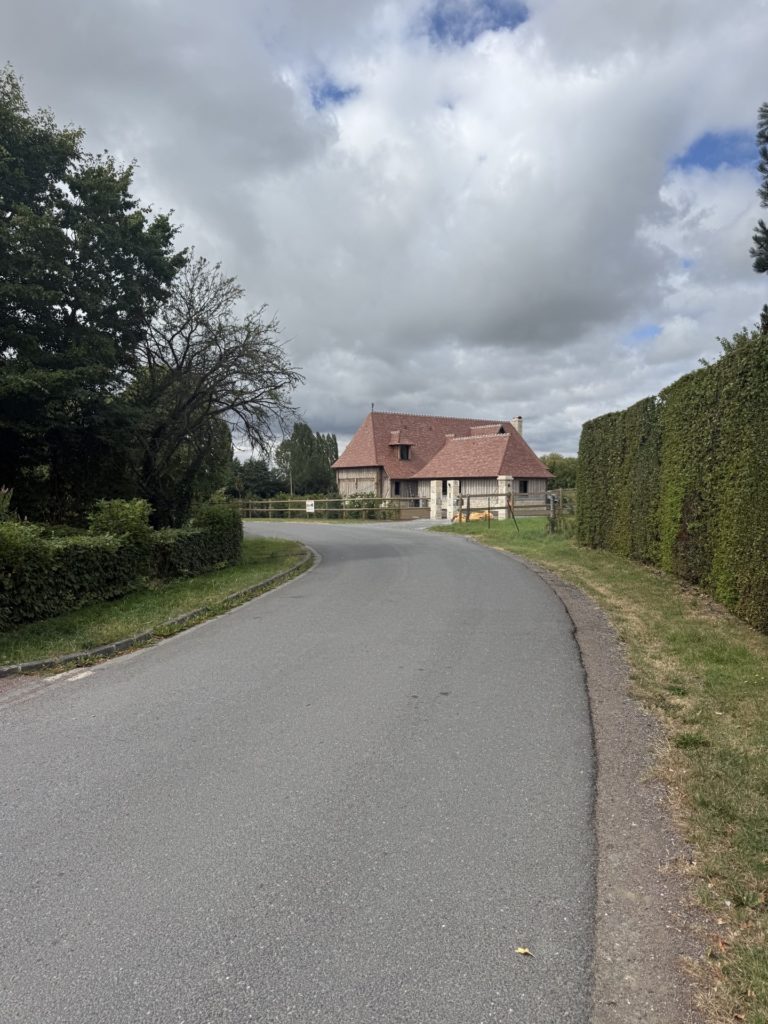
Perhaps that was because we were exploring rather than commuting. Perhaps it reflected a different driving culture. Or perhaps it was simply because we were on holiday.
Whatever the reason, something else happened too.
I slowed down.
Not just behind the wheel, but generally.
Time to Take Breath
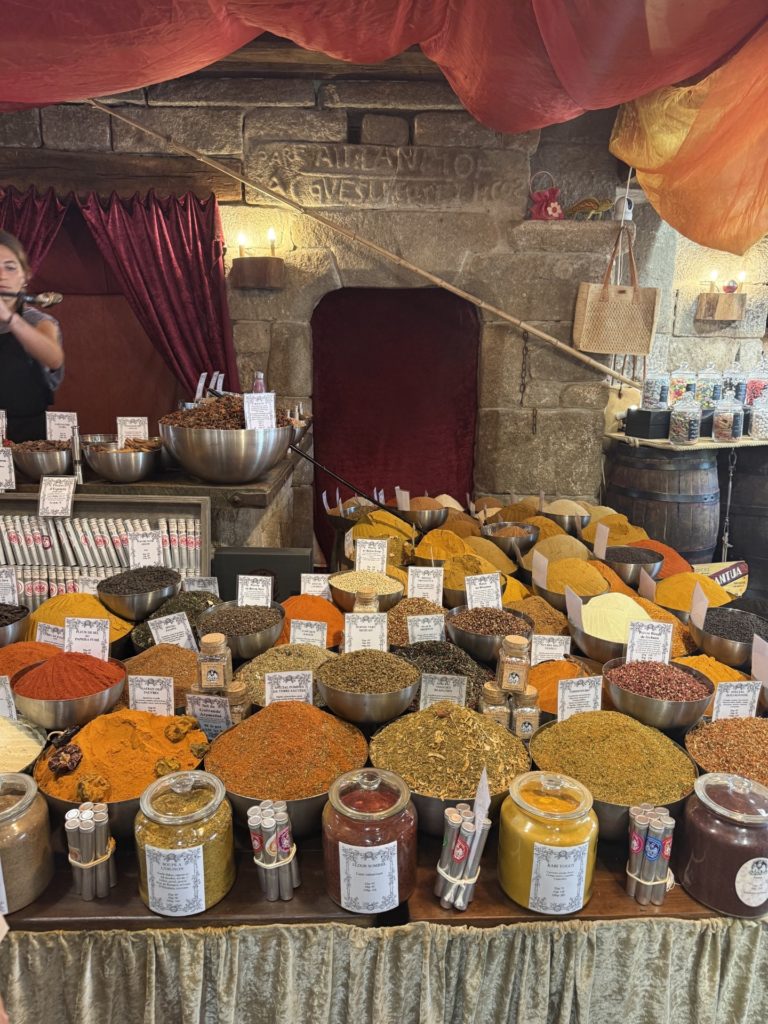
Instead of rushing to the next destination, we stopped whenever something caught our attention. We wandered through markets without looking at the time lingering over coffee before moving on to explore villages that weren’t in our guidebook. We admired magnificent cathedrals, watched the world go by from café terraces and discovered that some of the most memorable experiences are the ones you don’t have to plan and research for.
The journey became every bit as important as the destination.
My time in France reminded me how easily we allow everyday life to convince us that everything has to be done at speed and at a pace set by everyone else.. In this modern era, we can become impatient when someone is travelling a little slower than we would like. It’s now standard to search for the quickest route rather than the most enjoyable one. We have a tendency to measure success by how much we can fit into a day. Sometimes we do our best work when we give ourselves space to think, rather than trying to fill every moment with activity.
France gently reminded me that there is another option.
A Different Picture
By this point, you might reasonably expect me to tell you that France is one of the safest places in Europe to drive.
After all, I’d experienced quieter roads, excellent road surfaces, fewer potholes, lighter traffic and what felt like a more relaxed pace of driving. It certainly felt safer.
Surprisingly, the statistics tell a rather different story.
France records around twice as many road deaths per head of population as Great Britain. That statistic reminds us that our own experiences, however genuine, only ever tell part of the story. Many factors influence road safety, including road design, infrastructure, vehicle use, speed, driver behaviour, enforcement and emergency response. No single factor provides all the answers.
Improving road safety rarely comes down to one single intervention. It depends on understanding the whole picture and recognising that, while a collision may last only seconds, its impact on individuals and families can last a lifetime.
Coming Home
Our holiday eventually came to an end and, after a smooth crossing on Le Shuttle, we arrived back in Kent.
It was only after joining the M20 that I realised just how much I’d slowed down during our time in France.
The traffic became busier, the pace quickened, the tailgating returned and lane discipline became noticeably less consistent. I even caught myself feeling slightly more tense behind the wheel. It was a timely reminder of just how quickly our driving environment can influence the way we feel and, perhaps, the way we drive.
Perhaps I hadn’t simply driven through France.
Perhaps France had changed the way I was driving.
As I continued my journey home, I found myself reflecting on something I’d experienced throughout the previous fortnight.
Good journeys aren’t simply about arriving safely.
They’re about how we travel, the choices we make along the way and the people we meet.
Sadly, for hundreds of families every year, a journey ends very differently.
When it does, the Road Victims Trust is there to help them begin another journey — the journey towards living with grief, trauma and loss.
If my time in France reminded me of anything, it was this: taking a little more time often helps us appreciate what matters most. Whether we are travelling across a beautiful country or simply making our way home, showing a little more patience, taking a little more time and arriving safely are goals worth striving for.
Sometimes the most important part of any journey isn’t how quickly we reach the destination, but ensuring that everyone arrives there safely.
Perhaps, every now and then, we all need to look through a different windscreen.
Paul Cook
Chief Executive Officer
The Road Victims Trust